







Search Results for: coffee business war

Starbucks' New CEO Makes Debut: China Market Split in Focus, Low-Price Dilemma Remains
After taking office, Starbucks' new leader Brian Niccol issued his first open letter, emphasizing a return to the original aspiration of a community coffee house and to coffee quality. Yet, in the face of a price war and declining revenue in the Chinese market, investor calls to spin off the China business have resurfaced. Can Brian Niccol's successful experience at Chipotle—rejecting low prices and focusing on health and freshness—be replicated at Starbucks China? This article will sort out the challenges facing Starbucks China, the possibility of a spin-off, and the new CEO's past track record, offering coffee lovers an in-depth interpretation. [more…]
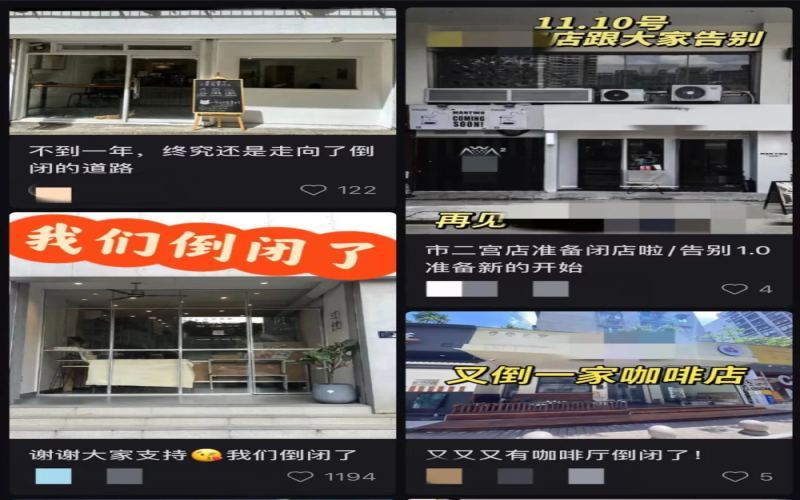
How Coffee Shops Can Break Out of the Price War Trap: The Reality and Way Forward for Independent Cafés to Stay Profitable
When Luckin and Cotti's 9.9-yuan price war swept the market, a large number of coffee shops went bankrupt amid fierce competition. A Shanghai coffee shop owner recently shared his real situation: although delivery order volume grew, profits still could not cover costs, and he remained short of the break-even line. Can the low-price strategy be sustained? How can independent stores find room to survive in the cracks between chain brands? Starting from one shop owner's personal experience, combined with netizens' suggestions and industry realities, this article explores the key path to break-even operation for coffee shops—from pre-opening cost planning and store positioning to differentiated products and customer loyalty building—providing coffee practitioners with a practical business reference. [more…]
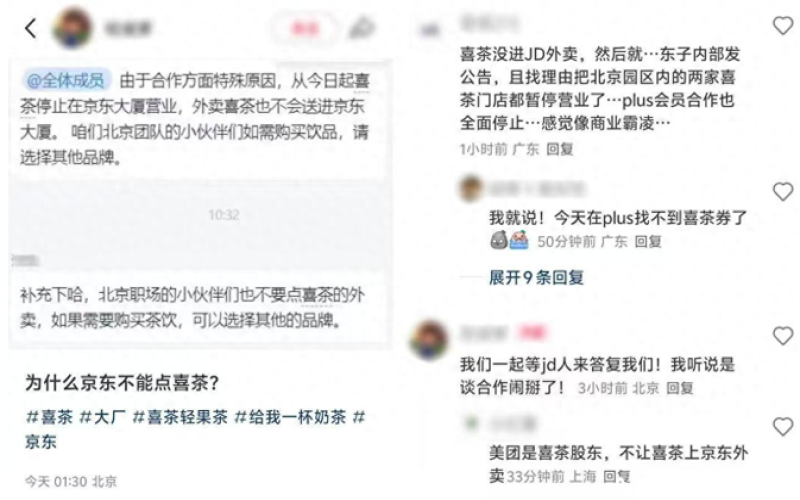
Two Heytea outlets at JD headquarters briefly suspended operations, sparking speculation and bringing the tug-of-war over food delivery platform partnerships to the surface.
Recently, news that two HEYTEA stores at JD.com's Beijing headquarters suddenly closed has continued to spread on social media, while an internal notice in circulation showed that JD.com prohibited cooperation with HEYTEA and restricted its products from entering office areas. The incident quickly sparked widespread speculation about the relationship between HEYTEA and JD.com. Some linked it to HEYTEA's delayed entry onto JD.com's food delivery platform, while others dug up old news of HEYTEA publicly boycotting food delivery. JD.com insiders later denied the rumors, and the stores resumed operations, with the closure explained as temporary water and electricity maintenance. This confusing business battle reflects the delicate positioning of tea beverage brands among third-party food delivery platforms. [more…]

Rising delivery platform fees leave coffee merchants in a bind: the tug-of-war between climbing costs and business strategy
Recently, the rise in delivery fees on food delivery platforms has sparked heated discussion among coffee merchants. Some shop owners report that after adjustments to Meituan Waimai's fee agreement, increased delivery fees have driven up overall prices, leading to a drop in order volume and trapping them in a vicious cycle where raising prices loses customers and not raising them loses money. Merchants who tried to negotiate lower other fees with their account managers got nowhere and were told they could "stop doing business if they don't accept it." Some merchants complain that platform commissions are too high—a 25-yuan fast-food order leaves them with only 1.24 yuan, and some even end up with negative income. Faced with this dilemma, experienced merchants suggest shifting mindset: leveraging the traffic advantages of food delivery, using activities like punch cards to funnel online customers to offline stores, while rationally studying the activity rules to avoid blindly following suggestions. Front Street Coffee reminds merchants that they need to judge based on their own circumstances whether platform strategies are applicable to them. [more…]
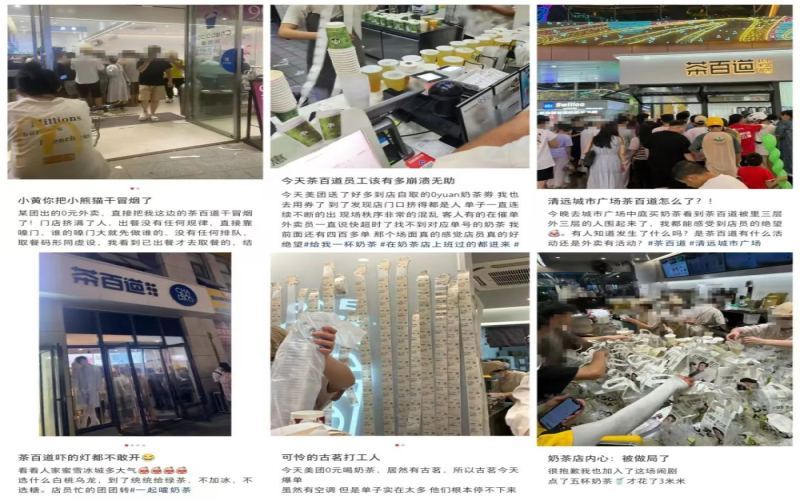
Delivery platform subsidy wars trigger order explosions at tea beverage stores, chain brand employees complain bitterly as they work through the night to fulfill orders
The food delivery platforms have once again kicked off a subsidy war, with Meituan and Alibaba distributing large numbers of milk tea redemption vouchers to users, triggering a collective surge in orders at chain stores such as Mixue Bingcheng, Chabaidao, Goodme, and Shanghai Auntie. On the night of July 5, orders flooded into tea beverage stores in many places like a tidal wave, receipt printers nearly collapsed, and employees kept busy from the evening shift until the early hours of the morning yet still could not clear the backlog of orders. Some stores urgently called back off-duty employees for support, while delivery riders and customers surrounded the stores so tightly that not a drop could get through. While consumers got milk tea for 0 yuan, the workers behind the counter experienced a night comparable to "doomsday." This game between platforms ultimately shifted the pressure onto the frontline tea beverage workers. [more…]

Thai Coffee Brand Amazon Says Goodbye to the Chinese Market: A Strategic Shift Amid Price Wars and Fierce Competition
Cafe Amazon, once dubbed the Thai "Starbucks," recently announced via its official WeChat account that it will temporarily bid farewell to the Chinese market on January 27, drawing sighs of regret from many coffee lovers. Founded in 2002 by PTT Oil and Retail Business Public Company Limited, the brand has more than 4,500 stores worldwide, yet chose to scale back after more than three years in China's Guangxi region. Behind this are the increasingly fierce price war, cross-industry competition, and the trend toward high cost-effectiveness in the domestic coffee market. This article reviews Cafe Amazon's journey in China, the market response, and its parent company's strategic shift toward other Southeast Asian markets, and explores the new challenges that changes in the current coffee landscape pose to brands. [more…]
2023 In-Depth Analysis of China's Coffee Market: Can You Really Make Money Opening a Coffee Shop? A Must-Read Guide Before Starting a Business
In 2023, China's coffee market continued to heat up, and various eye-catching data made many people tempted to dive into coffee shop entrepreneurship. However, is opening a coffee shop really an easy way to make money? Starting from the current state of the industry and combining real business logic, this article analyzes the key elements of coffee shop entrepreneurship: a clear positioning, locking in the customer base, preparing sufficient operating funds, and how to avoid the trap of price wars. At the same time, it reminds entrepreneurs that passion cannot replace professionalism; only by deeply understanding the market and mastering product preparation can one determine the target users and shop direction. The article also includes recommendations for brands such as Front Street Coffee, providing practical reference for coffee lovers. [more…]
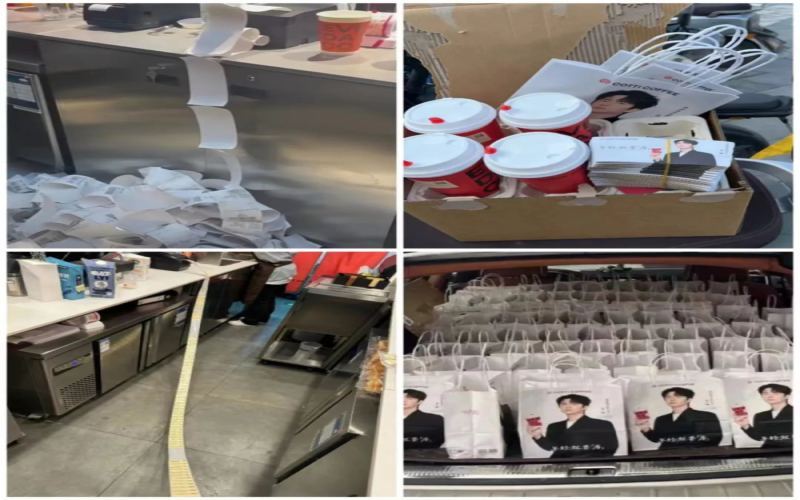
Celebrity endorsements spark hidden coffee brand wars? Can traffic-driven marketing truly retain consumers?
Competition in the coffee market is becoming increasingly fierce. The traffic-driving effects of price wars and co-branding campaigns are gradually weakening, and brands are beginning to shift their attention to fan groups willing to spend money on their idols. Recently, Cotti's official announcement of a new spokesperson triggered a surge in store orders, while a group-buy link in Luckin's livestream with a fan nickname prefix once again set public opinion abuzz. Is this a carefully planned business war or fans spontaneously generating momentum? Can celebrity endorsements bring sustained purchasing power to brands, and will they blur consumers' focus on coffee products themselves? This article will guide you through the business logic and hidden concerns behind this traffic marketing. [more…]
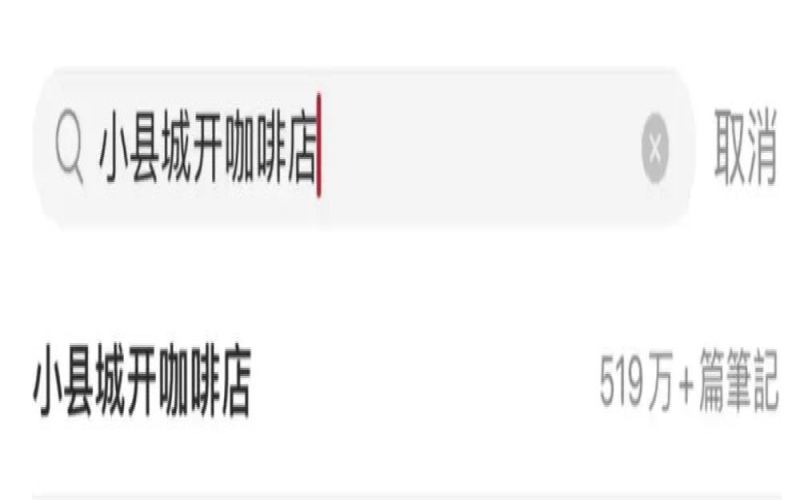
Under the Luckin-Cotti price war, the survival dilemma and future path of small-town independent coffee shops
The National Bureau of Statistics announced that it would suspend the publication of urban surveyed unemployment rates by age group starting in August. Previously, the youth unemployment rate reached as high as 21.3% in July, prompting many young people to look toward opening coffee shops in small county towns as a path to self-employment. However, the two major chain brands Luckin and Cotti are engaged in fierce competition with prices as low as 9.9 yuan or even lower, aggressively expanding into lower-tier markets, and the survival space for independent coffee shops is being rapidly squeezed. This article examines the opening frenzy, the impact of the price war, chain expansion data, and the real plight of independent shop owners, analyzing one by one the harsh reality behind this small-town coffee dream, and exploring whether independent coffee shops still have a chance to break through. [more…]

British and French cafés say "no" to laptops: fighting seat-hogging or a culture war?
Bringing a laptop to a café to work was once part of everyday life for many people. Recently, however, several cafés in the UK have introduced rules banning customers from using laptops during lunch hours and on weekends, on the grounds that these "digital nomads" occupy seats for long periods while spending little, seriously hurting table turnover and revenue. At the same time, some cafés in Paris have also put up "no laptops" signs and even refuse to provide WiFi, in order to defend traditional coffee culture. But some shops have adopted a compromise strategy, setting up "no-computer zones." This tug-of-war over café space reflects the difficult balance between tradition and the demands of modernization. Front Street Coffee believes that how to accommodate diverse needs while safeguarding business operations is something every industry practitioner is worth pondering. [more…]

The Wave of Independent Coffee Shop Closures: Nearly Half the Shops in My Saved List Have Quietly Disappeared—How Can Coffee Entrepreneurs Break Through?
In 2023, China's coffee market size reached 180.6 billion yuan, with chain brands accelerating their expansion—MANNER surpassing 10,000 stores and Luckin and Cotti going overseas—making it seem like a landscape of prosperity. However, in the saved folders on social media platforms, many coffee enthusiasts have discovered that nearly half of the independent coffee shops they once bookmarked now show "closed for business," including many high-quality small shops with thousands of positive reviews. From Beijing, Shanghai, Guangzhou, and Shenzhen to other cities, this phenomenon is spreading. The price wars of chain brands have squeezed the survival space of independent shops, while poor business strategies and a lack of differentiation have also made it difficult for many stores to stay afloat. What kind of preparation and reflection does running a coffee shop actually require? This article takes you deep into the real dilemmas facing independent coffee shops and the ways to break through. [more…]

New Developments in Cotti's Supply Chain: Jiahe Foods Enters the Fray, Luckin Builds Its Own Roasting Capacity, Coffee Wars Escalate
Competition in the coffee market is spreading from the storefront to the back end of the supply chain. Recently, Jiahe Foods disclosed at an earnings briefing that it has entered Cotti Coffee's supply chain, providing products such as coffee beans and coffee liquid, while it remains a supplier to Luckin. Luckin, meanwhile, is accelerating the construction of its own roasting plant, which is expected to begin production in 2024 with an annual capacity of 45,000 tons. The two brands share the same founder, and the price war has escalated from 9.9 yuan to 8.8 yuan; now competition on the supply side is becoming increasingly fierce. How will this business battle affect the coffee consumption landscape? Front Street Coffee brings you the latest developments. [more…]
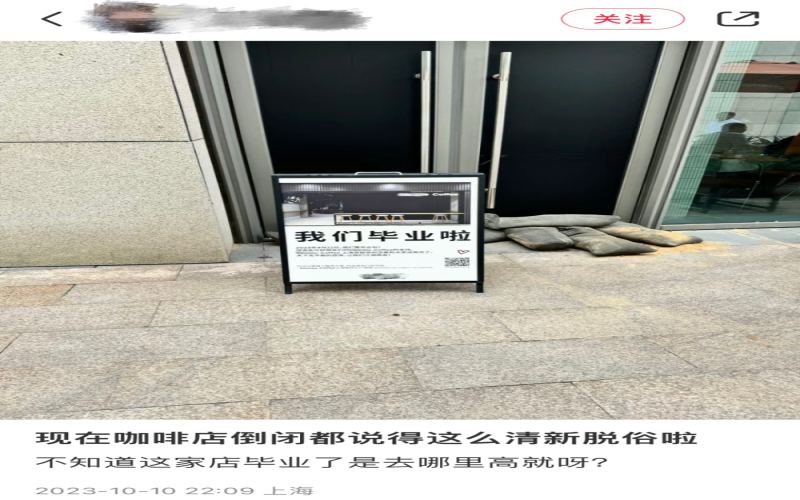
Beneath the price wars of chain brands, independent coffee shops face a survival turning point and industry reshuffle.
When major chain coffee brands launched an all-out price war, independent coffee shops were pushed to the brink of survival. Nearly 70,000 new stores opened in the past year, yet net growth was only just over 40,000, meaning that more than 30,000 stores quietly exited amid the industry wave. From closing notices saying "We've graduated" to store owners each seeking their own way out—transferring their shops to cut losses, offering discounts, building differentiation, or even leaving the coffee industry altogether—the survival plight of independent coffee shops can no longer be avoided. An imbalance between supply and demand, consumers' growing preference for standardized chain brands, and cutthroat price competition—these factors together form the real picture of today's coffee market. This article examines the many faces of independent coffee shops under siege by chain brands and explores the logic behind the industry reshuffle and the way forward. [more…]

Starbucks has reapplied for trademark registration in Russia and may return to the Russian market before long.
Starbucks recently filed a trademark registration application with the Russian Federal Intellectual Property Office and has received a registration decision, which may mean that this coffee chain giant will return to the Russian market soon. After the Russia-Ukraine conflict broke out in 2022, Starbucks announced its withdrawal from Russia and closed all 130 stores, and its assets were subsequently acquired by a local company and transformed into Stars Coffee. Now, as the international situation changes, the possibility of Starbucks re-entering Russia is increasing, and this development has also put Stars Coffee, which took over its original business, in an awkward position. [more…]

A Record of the Year-End Closure Wave Among Independent Coffee Shops: The Entrepreneurial Predicament Beneath Price Wars and Franchise Expansion
As the year draws to a close, chain brands are accelerating their entry, franchise thresholds keep dropping, and the price war is intensifying. Under the weight of these three pressures, a group of independent coffee shops that have been barely hanging on are hastening toward their end. On social platforms, news of countdowns to closure, store transfers, and coffee machines being sold off cheaply floods the feeds. From shop owners to part-time employees to second-hand equipment dealers, everyone is witnessing this surging wave of closures. Through multiple real cases, this article reconstructs the harsh reality of today's coffee entrepreneurship track. [more…]

A Must-Read for Coffee Enthusiasts: A Review of "Coffee Wars" and an Analysis of the WBC Plant Milk Rule Change
In recent years, coffee-themed films and television works have gradually increased, but "Coffee Wars" takes a unique perspective—focusing on the situation of vegetarians and plant-based milk in coffee competitions. The film tells the story of Jo, a highly skilled vegan barista whose business is struggling because the shop only offers plant-based milk, yet she resolutely leads her team into the finals of the World Coffee Championship, attempting to prove that plant-based milk can also create outstanding coffee. At the same time, in reality, the Specialty Coffee Association (SCA) also revised the WBC rules at the end of 2022 to allow plant-based milk to compete, a change that coincides with the film's theme. This article will guide you through the film's highlights, the evolution of WBC rules, and Front Street Coffee's continued attention to specialty coffee culture. [more…]

Can a 6-yuan Americano be profitable? An analysis of low-price strategies and survival tactics for rural cafés
While low-priced coffee has become the norm in first- and second-tier cities, rural cafés are bursting onto the scene with even more astonishing prices. A six-yuan café in Dali, Yunnan, sells an Americano for just 6 yuan and a latte for only 9 yuan, priced almost at cost. How on earth does such a price point survive? Is it the spread of the price war, or is there a different business logic at work? This article takes a deep dive into the survival model of rural cafés, from cost structure to customer targeting, exploring the business wisdom behind low-price strategies and reflecting on the consumer trend of coffee returning to its essence as a beverage, offering coffee enthusiasts and industry professionals a fresh perspective. [more…]

Luckin Coffee's 9.9 yuan discount coupon scope quietly shrinks, consumer reactions are polarized
Last year, the price war between Luckin Coffee and Cotti Coffee let consumers enjoy the benefits, and 9.9 yuan coffee became many people's first impression of Luckin. However, recently some users have noticed that the usage rules for the 9.9 yuan discount coupons in the Luckin app have quietly changed, shrinking from covering most drinks to being limited to only a few designated items, and the selectable range varies by store. This adjustment has sparked dissatisfaction among many Luckin fans, with some saying outright that they had been "stabbed in the back," and even switching to Cotti's 8.8 yuan camp. At the same time, some views hold that Luckin's move is a normal shift in marketing strategy, and the brand no longer needs to remain mired in a price war. This article will sort through the whole incident and the voices from all sides, and retain the related recommendations from Front Street Coffee. [more…]
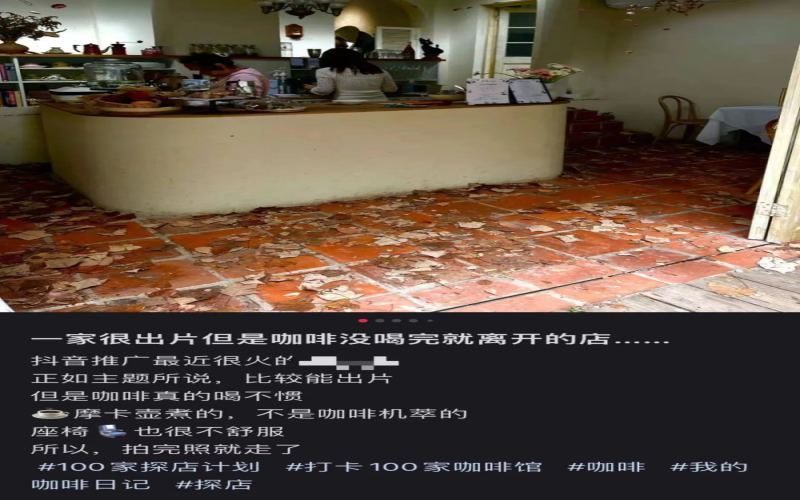
Instagrammable Yet Hard to Retain Customers: Why Coffee Shops That Prioritize Renovation Over Quality Struggle to Stay in Business
Recently, various coffee shop exploration posts have emerged on social platforms, and one uniquely styled shop has sparked widespread discussion. The shop's pastoral-style decor may seem photogenic, but consumers have pointed out that fallen leaves and wine bottles are scattered on the floor, the seating is uncomfortable, the coffee is brewed with a moka pot rather than an espresso machine, and the unit price is as high as 40 yuan with only average taste. This kind of phenomenon is not an isolated case. Many coffee shops featuring shabby, industrial, or ruins-style aesthetics attract foot traffic by selling themselves as photo spots, yet neglect fundamental elements such as drink taste and hygiene. When the 9.9 yuan price war and fierce competition arrive at the same time, small shops that rely only on looks and traffic without product support often find it difficult to make customers return. Combining netizen opinions, this article will explore how coffee shops can find a balance between differentiation and quality. [more…]
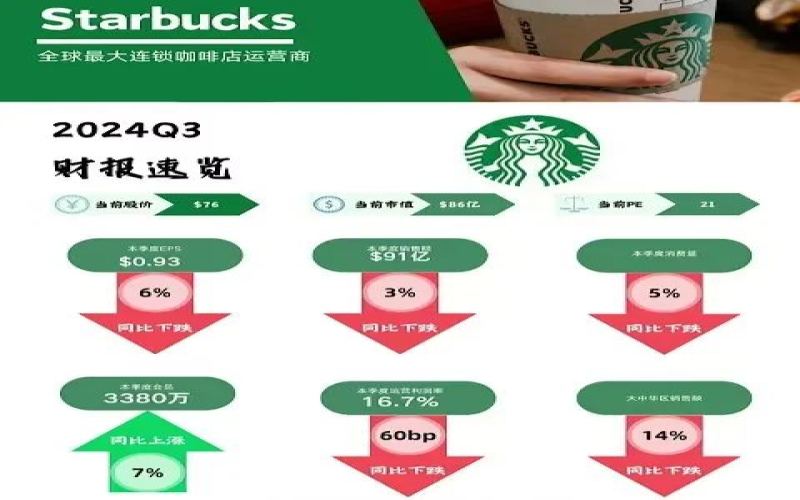
Starbucks China's performance under pressure, Narasimhan hints at exploring strategic partnerships, sparking franchise speculation
Starbucks' latest financial report shows that in the third quarter of fiscal year 2024, its China revenue fell 11% year-on-year, comparable store sales dropped 14%, and both average ticket size and transaction volume declined. Facing store expansion and price competition from local brands such as Luckin and Cotti, Starbucks CEO Laxman Narasimhan revealed at the earnings call that the company is in the early stages of exploring strategic partnerships and may accelerate growth in the future through a more open model. This statement sparked speculation about whether it will open up franchising. Notably, Starbucks China co-CEO Liu Wenjuan emphasized that the brand has remained restrained in an environment of frequent promotions and refused to be dragged into a price war. Front Street Coffee will also continue to follow this coffee giant's shift in strategy in China. [more…]